


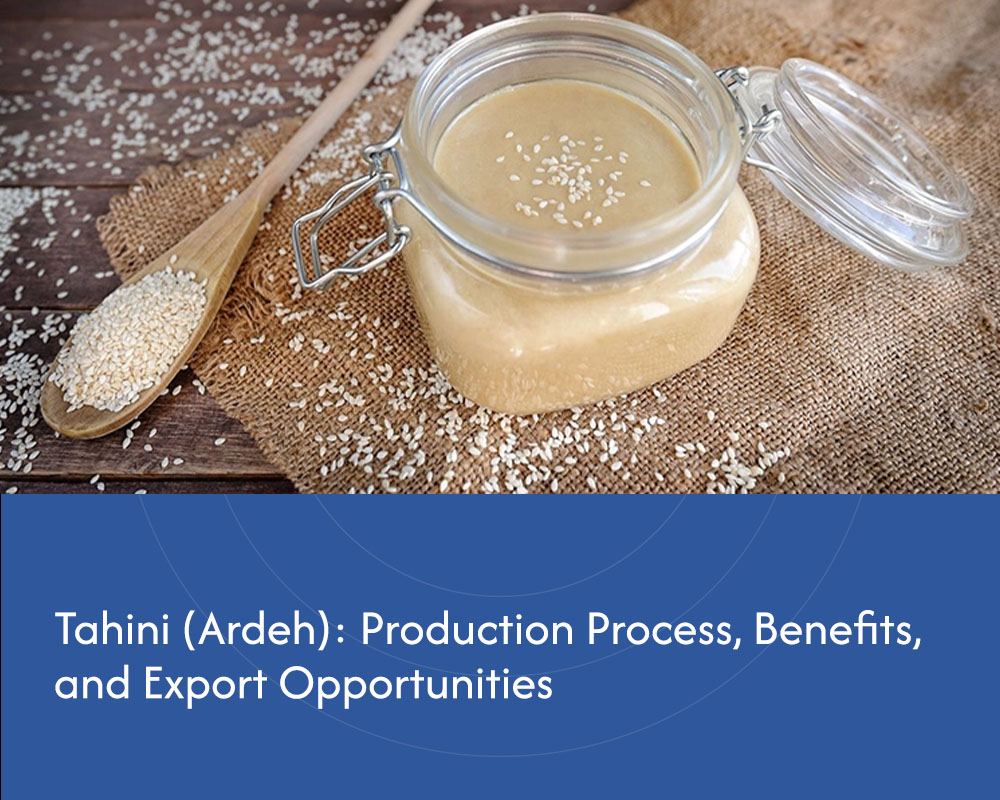
What Is Tahini (Ardeh)?
Tahini is a smooth paste made from ground sesame seeds. Depending on the production method, it can be produced from hulled or unhulled sesame seeds, resulting in different flavors, colors, and nutritional profiles. Iranian tahini is known for its rich aroma, balanced taste, and smooth texture, making it suitable for both traditional and industrial applications.
Tahini is commonly used as a spread, an ingredient in sauces and dressings, and as a base for products such as hummus, halva, and various confectionery items.
Tahini Production Process
The quality of tahini depends heavily on the production process. In Iran, modern processing techniques are combined with traditional expertise to ensure consistency and high standards.
1. Sesame Seed Selection
High-quality sesame seeds are carefully selected based on size, oil content, and purity. Clean and mature seeds are essential for producing premium tahini with a rich flavor and smooth consistency.
2. Cleaning and Dehulling
The sesame seeds are thoroughly cleaned to remove impurities. For hulled tahini, the outer husk is removed to achieve a lighter color and milder taste. Unhulled tahini, which retains the seed coat, offers higher fiber content and a stronger flavor.
3. Roasting
Roasting is a critical step that enhances the aroma and flavor of the sesame seeds. Controlled roasting temperatures ensure that the natural oils are released without burning, resulting in a nutty, balanced taste.
4. Grinding and Milling
The roasted seeds are finely ground using stone mills or modern grinders. This process transforms the seeds into a smooth, creamy paste without the need for additives or preservatives.
5. Quality Control and Packaging
Before packaging, the tahini is tested for texture, flavor, and consistency. It is then packed in bulk or retail containers suitable for export, ensuring shelf stability and product safety.
Nutritional Benefits of Tahini
Tahini is valued not only for its taste but also for its impressive nutritional profile. It is a rich source of:
- Healthy fats, including omega-6 fatty acids
- Plant-based protein
- Calcium, iron, magnesium, and phosphorus
- Antioxidants and natural fiber
These nutrients make tahini a popular ingredient among health-conscious consumers, athletes, and those following vegetarian or vegan diets. Its natural composition and clean-label appeal further enhance its market value.
Applications in the Food Industry
Tahini is widely used across various food sectors:
- Retail and Food Service: As a spread or dip, often combined with honey, date syrup, or lemon juice
- Sauces and Dressings: Used in salad dressings, marinades, and Middle Eastern sauces
- Confectionery: A key ingredient in halva, desserts, and snack bars
- Food Manufacturing: Incorporated into bakery items, plant-based products, and functional foods
Its creamy texture and nutty flavor make tahini a versatile ingredient for both traditional recipes and modern food innovations.
Export Opportunities and Global Demand
Global demand for tahini has increased significantly due to the rising popularity of Mediterranean and Middle Eastern cuisine, as well as the global shift toward plant-based and natural foods. Major import markets include Europe, North America, the Middle East, and Asia.
Iranian tahini is well-positioned to serve these markets due to its consistent quality, competitive pricing, and flexible supply options. Exporters offer tahini in bulk for food manufacturers or in retail packaging for supermarkets and specialty food stores.
Why Importers Choose Iranian Tahini
International buyers choose Iranian tahini for several key reasons:
- Consistent quality and smooth texture
- Competitive pricing and reliable supply
- Compliance with international food safety standards
- Custom packaging and private labeling options
- Strong export and logistics experience
These factors make Iranian tahini a dependable choice for importers seeking long-term supply partnerships.
Conclusion
Tahini (Ardeh) is a valuable, nutritious, and versatile product with strong global demand. From its carefully controlled production process to its wide range of applications and export opportunities, tahini represents a strategic product for international food markets.
With its rich tradition, high-quality production, and export readiness, Iranian tahini continues to gain recognition as a trusted ingredient for retailers, food manufacturers, and distributors worldwide.